


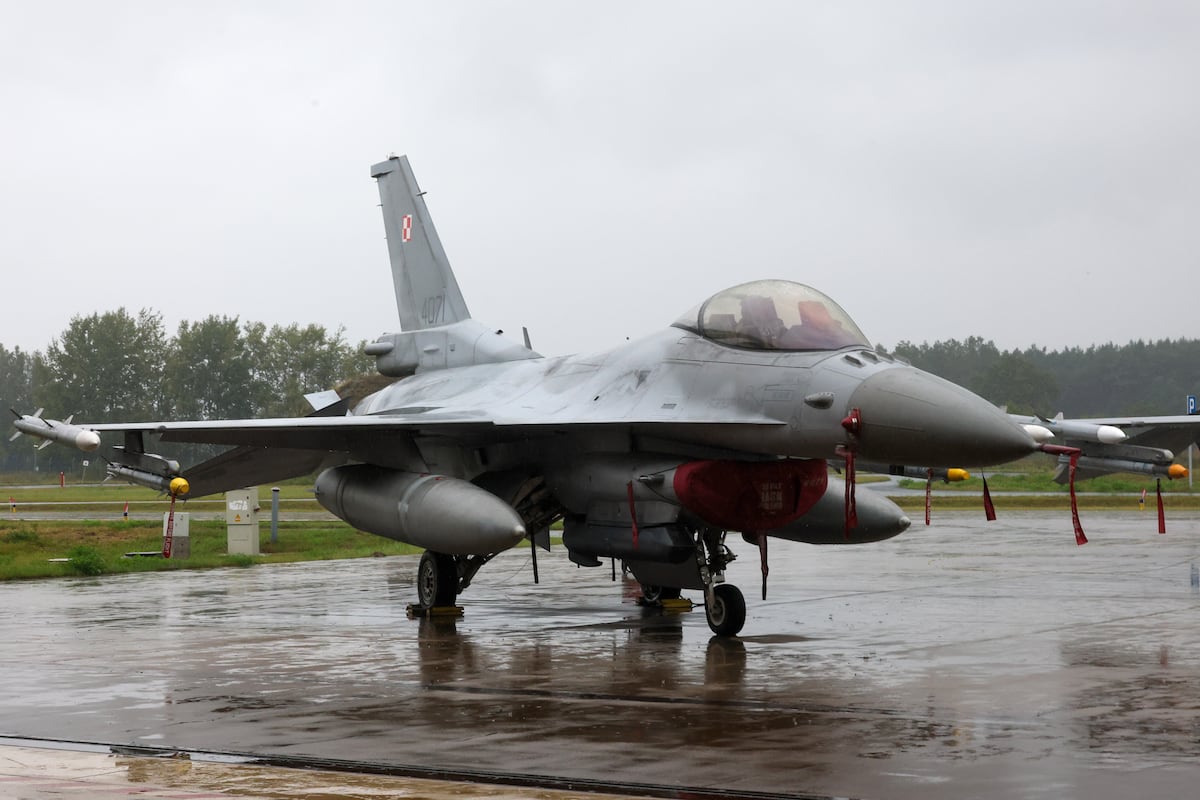
The deployment of two Polish F-16 fighter jets to intercept Russian aircraft flying with deactivated transponders over the Baltic Sea region underscores the escalating friction along NATO’s eastern flank, a dynamic that has intensified exponentially since the full-scale Russian invasion of Ukraine in February 2022. This incident, which follows a 300% increase in reported Russian sorties near NATO airspace over the past 24 months according to publicly available NATO Allied Air Command data, represents a deliberate test of the transatlantic alliance’s monitoring capabilities and collective defense resolve, as Moscow continues to employ hybrid tactics that blur the line between peacetime military posturing and open provocation. Deactivating aircraft transponders violates core International Civil Aviation Organization (ICAO) safety protocols, creating latent risks of mid-air collisions with civilian traffic while allowing Russian strategic bombers, reconnaissance aircraft, and fighter escorts to operate with reduced radar visibility, a practice that has become a staple of Moscow’s efforts to assert hegemonic influence over its perceived sphere of interest in Eastern Europe. Poland, as a frontline NATO member state sharing a border with Russia’s Kaliningrad exclave and Belarus, a key Russian ally, has borne the brunt of these provocations, with its air force scrambling to intercept Russian aircraft 42 times in the first half of 2024 alone, a figure that outpaces all other NATO members except Turkey, which faces similar incursions from Russian aircraft over the Black Sea. This pattern of behavior traces its roots to the post-Cold War erosion of arms control frameworks, including the collapse of the Intermediate-Range Nuclear Forces Treaty in 2019 and the subsequent suspension of the Treaty on Open Skies, which eliminated critical transparency mechanisms that once reduced the risk of accidental escalation between nuclear-armed adversaries.
The broader geopolitical implications of these persistent airspace incursions extend far beyond the borders of Poland or the Baltic states, as they reinforce the hardening divide between the Western-led liberal democratic bloc and the increasingly aligned authoritarian axis of Russia, Iran, North Korea, and China, which has provided Moscow with critical diplomatic and material support for its war in Ukraine. Economically, the constant state of military alert required to respond to Russian provocations has forced NATO frontline states to divert billions of euros in public funds to air defense systems, fighter jet procurements, and border surveillance infrastructure, funds that would otherwise be allocated to social programs, green energy transitions, or post-pandemic economic recovery efforts, exacerbating fiscal pressures across the European Union at a time when the bloc is already grappling with stagnant growth and rising inflation. Diplomatically, these incidents have widened the rift between NATO members with direct exposure to Russian aggression, such as Poland, the Baltic states, and Romania, and those farther west, including Germany, France, and Italy, which have historically favored a more conciliatory approach to Moscow to preserve energy trade ties and avoid direct escalation. This internal division within the transatlantic alliance has emboldened Russian decision-makers, who calculate that the cost of probing NATO’s airspace remains low compared to the potential gains of weakening alliance cohesion and normalizing the presence of Russian military assets in strategic approaches to Western Europe. The historical roots of this divide date back to the 1990s, when Western powers expanded NATO eastward despite formal and informal assurances to the contrary, a process that Moscow has consistently framed as an existential threat to its sovereignty and regional influence, fueling decades of mutual distrust that now manifest in these high-stakes aerial standoffs.
For Latin America and specifically Colombia, the escalation of military tensions along NATO’s eastern flank carries both direct and indirect repercussions that are often overlooked in regional public discourse, as the global shift toward multipolarity accelerates amid the stalemate in Ukraine and the strengthening of alternative power blocs outside the Western sphere. Colombia, which has historically anchored its foreign policy and security architecture to the United States and transatlantic institutions, now faces a delicate balancing act as the Petro administration pursues a diversification agenda that includes closer economic and diplomatic ties with China, Russia, and BRICS member states, a shift that risks friction with traditional allies if the divide between Western and authoritarian blocs hardens further. Indirectly, the trillions of dollars in military and financial aid diverted by the US and EU to Ukraine since 2022 have reduced available funding for development programs, climate initiatives, and security cooperation projects in Latin America, including Colombia, where rural development and coca substitution efforts rely heavily on international donor support that has been sidelined by the focus on Eastern Europe. Historically, Colombia’s own experience with internal armed conflict and external interference offers a parallel to the sovereignty challenges faced by smaller states caught between competing great powers, a dynamic that underscores the importance of maintaining a non-aligned diplomatic posture that prioritizes national interests over bloc loyalty. Additionally, the normalization of hybrid warfare tactics, including disinformation campaigns and strategic provocations like the transponderless Russian flights intercepted by Poland, poses new risks to Colombia’s digital infrastructure and electoral stability, as similar tactics have already been documented in recent Latin American election cycles, highlighting the need for regional cooperation to strengthen cybersecurity and resilience against external interference.
Acerca del autor